
Painting self-portraits today raises numerous interesting questions. With the ubiquity of camera phones, Facebook, Instagram, and every other social media platform involving self-image, most of us have become skilled and self-conscious curators of self-representation. So why and how do artists decide to portray themselves now?
On Painting Self-Portraits
By Paul Rosiak
Part of what makes a self-portrait done from life interesting is that it has a mind of its own. You can sit down at the start and say (likely subconsciously), “I’m going to make a painting that portrays me in this way.” But often something happens when you stare at and paint yourself over an extended period of time: the painting soon develops its own internal logic, takes on a life of its own, and to some extent eludes control.
There’s a beauty and a kind of justice to the fact that you can’t fake things easily in a painting. How does an expression form? Where does it come from? Over time, and through interactions between the mind and the hand, between the hand and physical materials of paint and canvas, the truth finds a way out, if only subtly. Things come through — a pain, a look of tiredness, a worry, an excitement, a joy, or some aspect of yourself that perhaps you wanted to deny or didn’t know was there.
These come through not only in one’s physical gesture and facial expression, but also in how the paint or pencil itself is handled. Brushstrokes, as the artist Robert Henri (1865–1929) wrote, “carry a message whether you will it or not. The stroke is just like the artist at the time he makes it. All the certainties, all the uncertainties, all the bigness of his spirit and all the littlenesses are in it.”
A great self-portrait accepts the inevitability of this influence and remains receptive and honest in the face of whatever comes. Making a painting requires control and design, manipulation and forethought. But it is also this receptivity to the unknown, to the unexpected truth, that makes painting self-portraits interesting and particularly valuable today.
Voyages of Discovery
Apart from the considerable benefit of having a free model, why make a self-portrait? If approached with receptivity, the artist can discover what one thinks and feels through the process of working. Gustave Flaubert observed, “The art of writing is the art of discovering what you believe.” Painting, too, when approached with honesty and openness, can become a means for self-reflection and discovery, as well as change.
Friedrich Nietzsche wrote that art “is not merely an imitation of the reality of nature, but in truth a metaphysical supplement to the reality of nature, placed alongside thereof for its conquest.” A self-portrait is a record of a person and moment in time. But in the process of painting — through the acts of searching, reflecting, making decisions, discovering — one also changes who one is through the act of creating. When we encounter an artist’s self-portrait, we see not a static image, but a person unfolding and evolving over time.
When using a mirror to make a self-portrait, unless the artist uses two mirrors, her image will appear reversed. This image is more true to how she most frequently sees herself. Like an autobiography, a self-portrait is not just a literal representation of a person, but also a record of this reversal — of how the artist relates to herself, how she wants to be seen, and how she interacts with the uncontainable that rises up and presents itself, in spite of desires to manipulate and to stage.
Why are self-portraits notoriously difficult? We all come to the mirror with strong pre-existing ideas and opinions about ourselves. Having a strong symbol or idea of something in our minds can prevent us from seeing what’s really presented to our eyes. For instance, most of us know that most tables have four legs, so while drawing a table it can be hard to leave out that fourth leg, even when we can’t see it from our particular vantage point. Going to paint the purple or greenish sky before us, it is hard to shake the ingrained idea that the sky is blue. Faces are particularly prone to this tendency, and our own faces perhaps most of all.
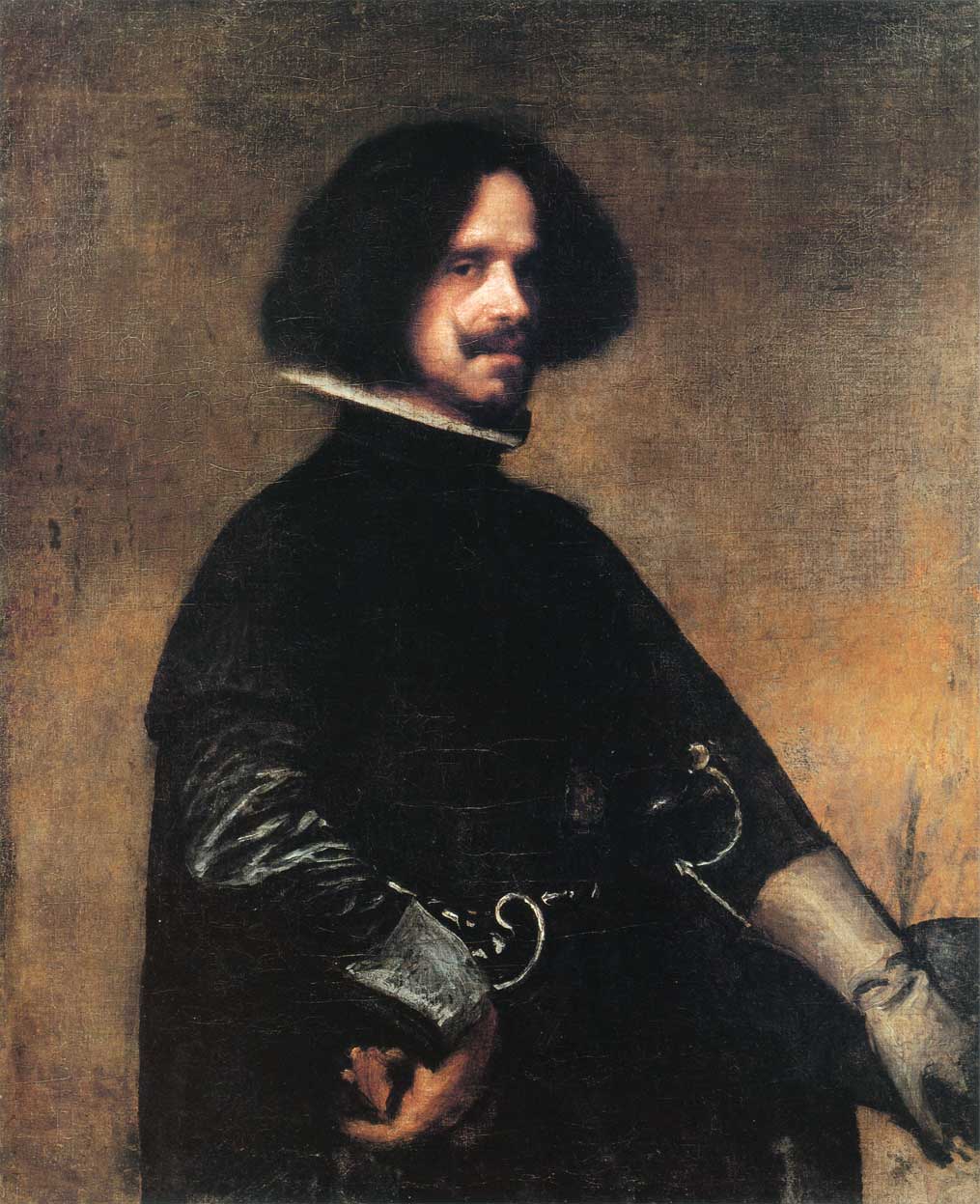
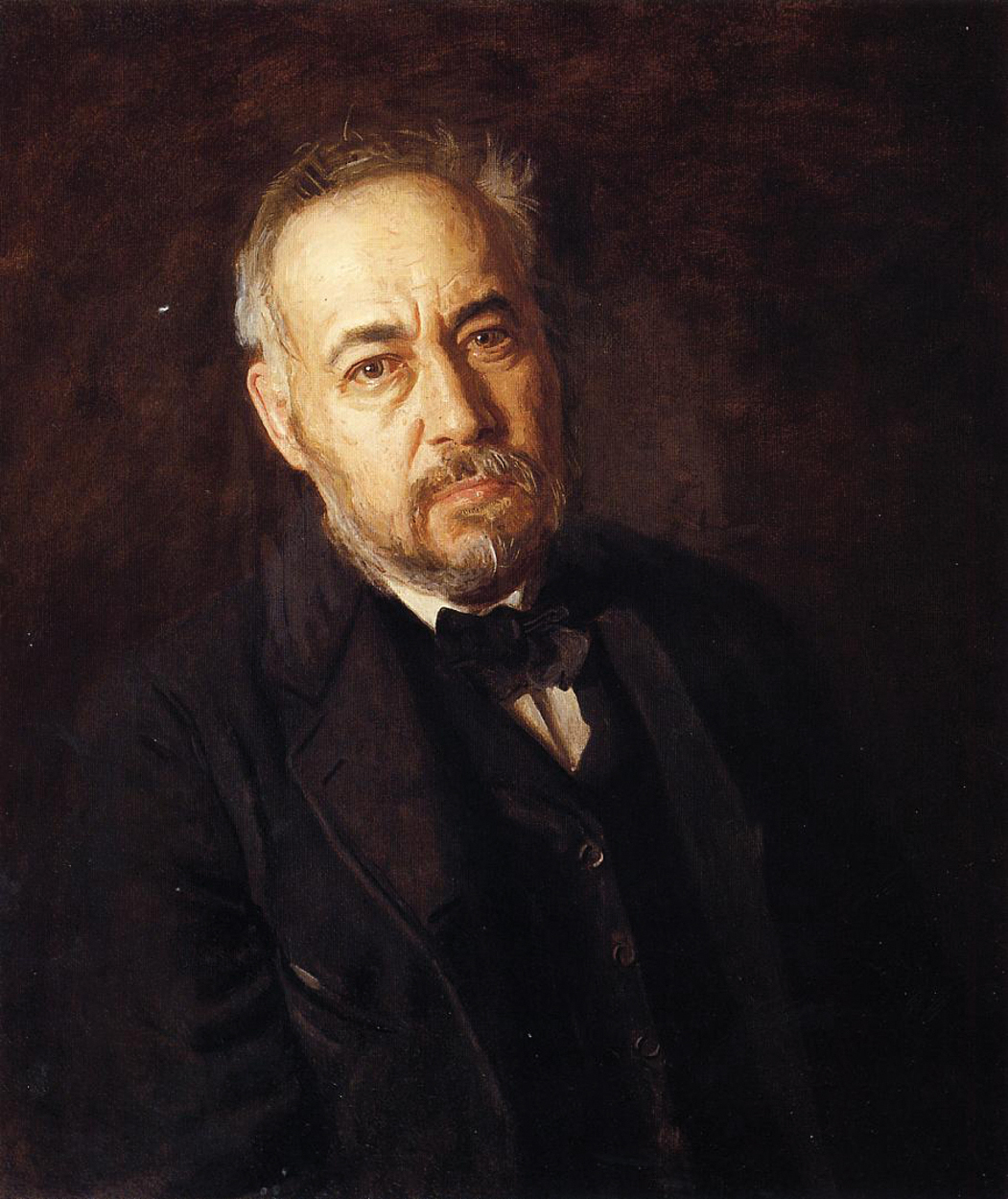
Diego Velázquez and Thomas Eakins were known for the unflinching honesty of their portraits, sometimes to the chagrin of their sitters. The unique difficulty in a self-portrait, but also its appeal when done well, is that it takes courage and integrity to really see and not censor ourselves; to approach with a willingness to see past symbolic representations of what we think we ought to look like or how we wish to be seen, remaining open to any potentially unpleasant discoveries we find in the mirror. While being the artist, we cannot also be the outraged patron.
This, of course, is easier said than done. The experience of painting self-portraits is often strange and potentially unnerving. When was the last time you looked into anyone’s eyes for longer than the socially appropriate few seconds? This isn’t an experience we have very often, even with those closest to us. It is an intense experience that can quickly veer into the uncanny. Your face, your identity, become strange, as one’s name does when uttered aloud over and over.
In a self-portrait from life, you might spend hours, weeks, or even months staring at your reflection. This time is often interspersed with outbursts like “Is the space between my nose and mouth really that long?!” or “Since when was my left ear longer than my right?!” Yet as you continue to stare, something can happen; you become more acutely aware of the connection — and dissociation — between outward appearance and the thoughts, feelings, and inner life animating physical form. Maintaining this awareness while painting, the artist is continually asking and attempting to answer the questions through a physical medium: what is it that makes you alive? What is it that makes you you?
Creating a self-portrait is arguably the only time you truly know something of what’s going on inside the head and heart of the model as you’re working. Yet despite this intimate knowledge, you also quickly become aware of all that inevitably is not captured, no matter how true or impressive the final portrait is. Author William Zinsser (1922–2015) wrote, “Memoir isn’t the summary of a life; it’s a window into a life.” Creating a self-portrait makes you acutely aware of this gap — of the limitations of any representation.
Soon we realize that if this gap is present in a self-portrait, for which we have unique access to the model’s life and mind, it must be present in all portraits. Attempting a self-portrait makes us more aware of the limitations of our ordinary quick summaries of others. It helps us find a greater evaluative generosity of spirit, moving one step closer to being able to, as the psychologist Abraham Maslow wrote, “treat each person as an infinity.”
Tech’s Longstanding Impact
Mirrors have been around for thousands of years, but it wasn’t until technological breakthroughs in glass and metallurgy during the Renaissance that they started to become more widespread. As they did, more and more artists began to draw and paint self-portraits. Shortly after this breakthrough, glass was put to use to make lenses to peer into the night sky. The first recorded telescope appeared in 1608 in the Netherlands, when the spectacle-maker Hans Lippershey sought a patent for “a certain instrument for seeing far.” Two years later, Galileo looked up at the sky with a device of his own making.
In his 2014 book How We Got to Now: Six Innovations That Made the Modern World, Steven Johnson noted, “At the exact moment that the glass lens was allowing us to extend our vision to the stars or microscopic cells, glass mirrors were allowing us to see ourselves for the first time. It set in motion a reorientation of society that was more subtle, but no less transformative, than the reorientation of our place in the universe that the telescope engendered.”

Rembrandt van Rijn, one of the most famous practitioners of the self-portrait, was two years old when Lippershey requested his patent. This artist drew his first self-portrait early in life and kept going for the next 40 years, completing nearly 80 in total and working right up until his death in 1669.
Looking at Rembrandt’s self-portraits, we feel the quality of receptivity to the unknown, to the unexpected, to the truth whatever it may be. We can feel in his brushstrokes and expressions the interaction between all that is uncontrollable and the impulse to direct. The year before Rembrandt died, as he looked in the mirror and painted, Isaac Newton was putting the mirror to a new use by making the first reflecting telescope. Newton used his instruments to look up at the stars; Rembrandt to look inward.
Though they each may have paused on a fixed point, as in all great self-portraits, the eye points toward infinity.
Browse more articles on figurative art and artists here at RealismToday.com.
Realism Today covers artists and products we think you’ll love. Linked products are independently selected and linked to for your convenience. If you buy something using a link on this page, Streamline Publishing may receive a small share of that sale.