

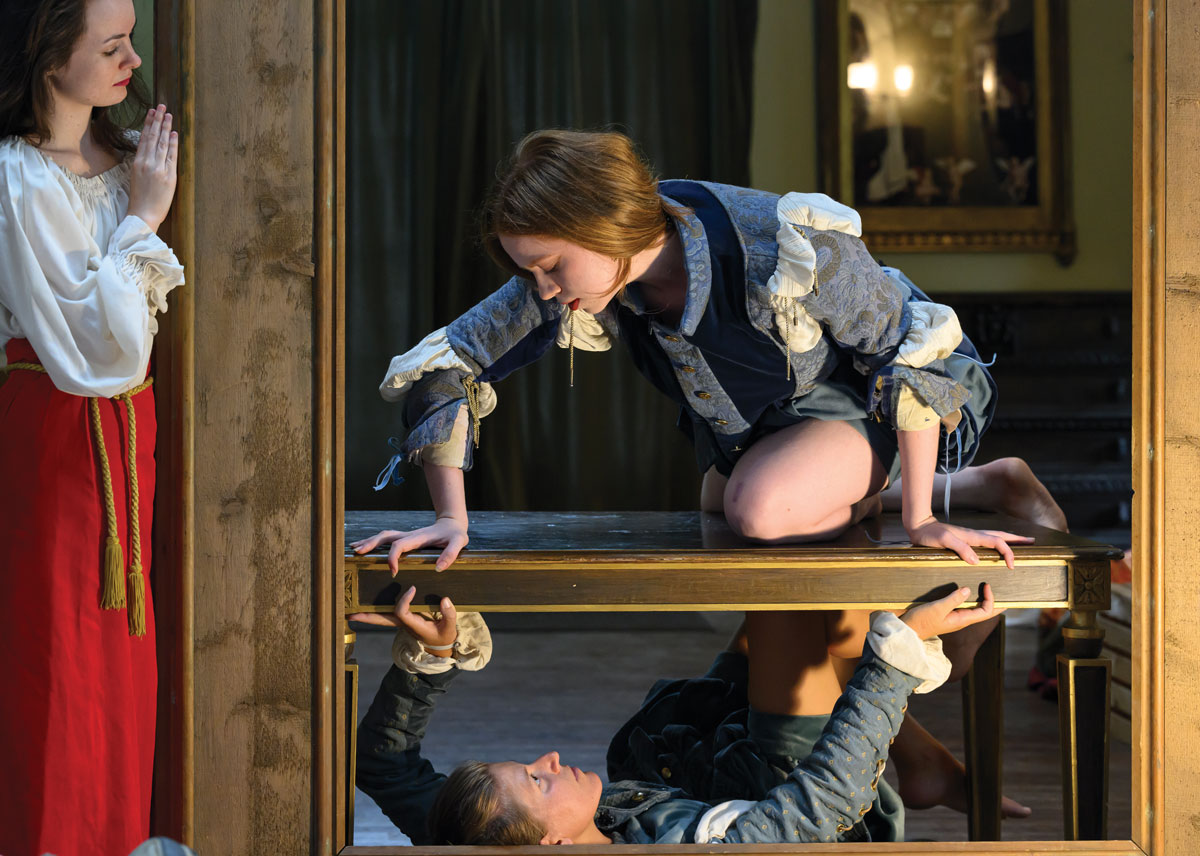
Essentially recreations of famous paintings, sculptures, and historical events that are undertaken by costumed individuals, tableaux vivants (the French term for “living pictures”) began as an amusement among Europe’s upper classes. Similarly sophisticated Americans followed suit. Continue reading >>>
By Thomas Connors
Cycloramas. Magic lantern shows. The bicycle. With the growth of leisure in the 19th century, Americans had no shortage of entertainment to fill their increasing (albeit still limited) downtime. One of the more curious ones was the tableau vivant. Essentially recreations of famous paintings, sculptures, and historical events that are undertaken by costumed individuals, tableaux vivants (the French term for “living pictures”) began as an amusement among Europe’s upper classes. Similarly sophisticated Americans followed suit.
In her 1905 novel “The House of Mirth,” Edith Wharton describes the effect that tableaux vivants had on her lovelorn and socially disadvantaged character Lawrence Selden:
“To unfurnished minds they remain, in spite of every enhancement of art, only a superior kind of waxworks; but to the responsive fancy they may give magic glimpses of the boundary world between fact and imagination. Selden’s mind was of this order: he could yield to vision-making influences as completely as a child to the spell of a fairytale.”
By the 1840s, tableaux vivants had moved from the domestic parlor to the theatrical stage. Now working stiffs — just like fine gentlemen in grand houses — could gaze openly at diaphanously clad young women mimicking classical statues, all under the guise of cultural enrichment. Ogling aside, for many presenters and viewers tableaux vivants remained educative at their core, a mode of art appreciation for which there was no shortage of instruction for those eager to master the form. In his 1867 book “Parlor Tableaux and Amateur Theatricals,” William Fearing Gill (an early biographer of Edgar Allan Poe) stated, “To originate and produce fine tableaux undoubtedly requires considerable taste and some knowledge of art; but there can be no reason why a person with a manual before him… cannot, profiting by the experience of another, be equally successful.”
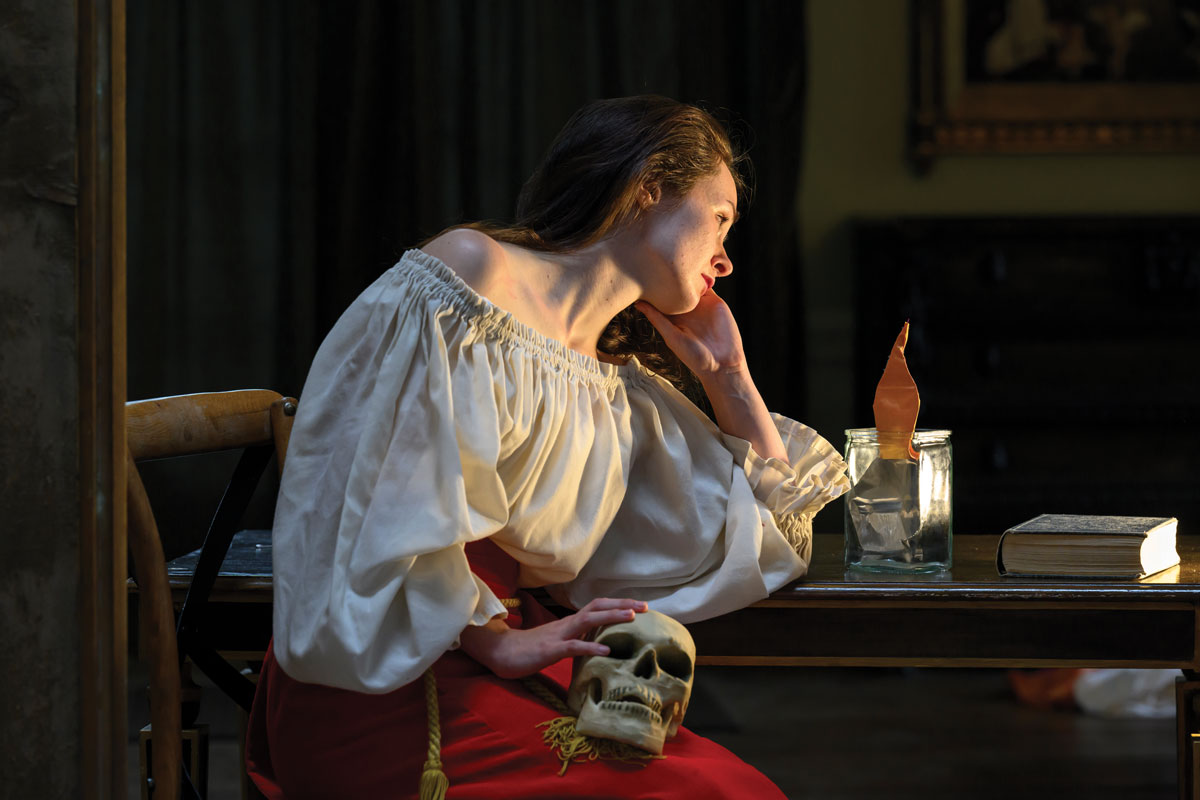
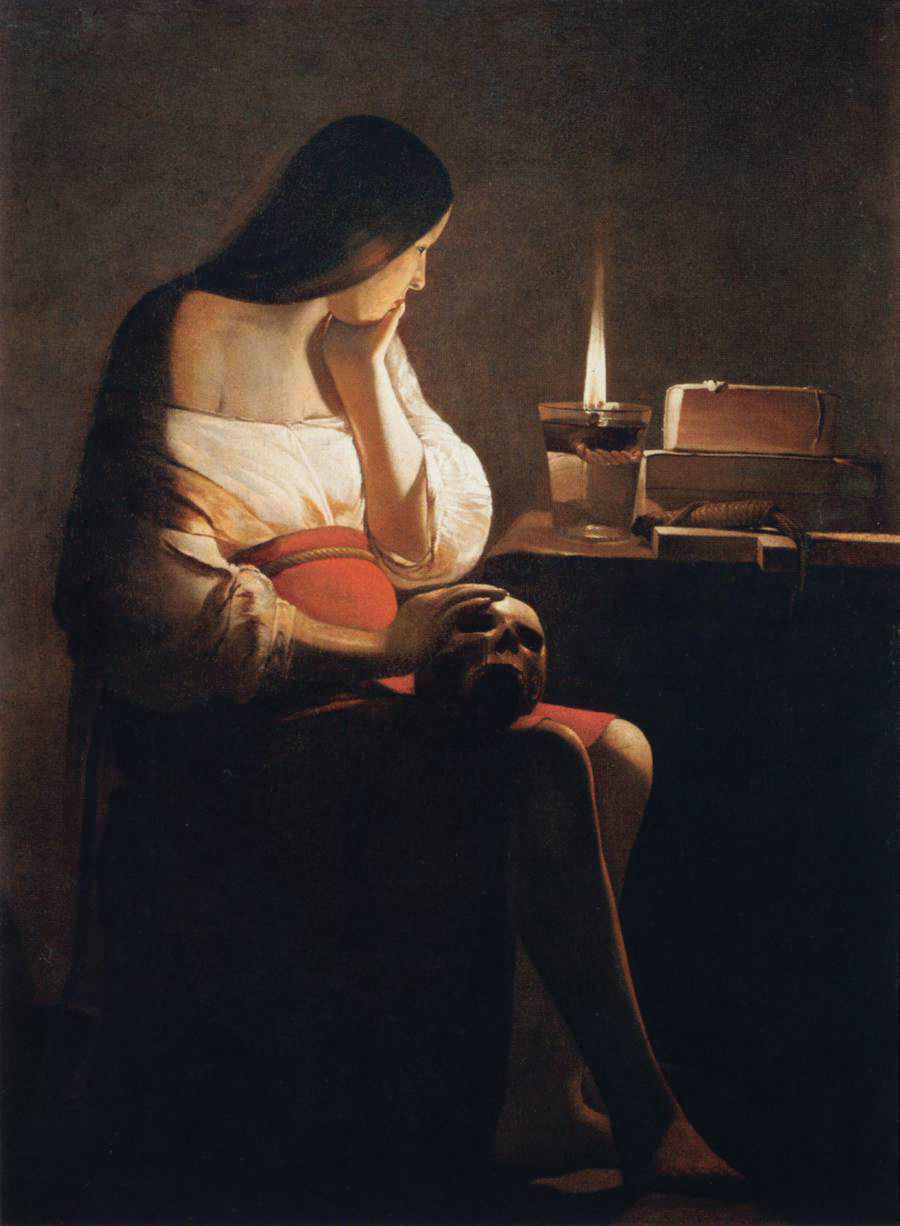
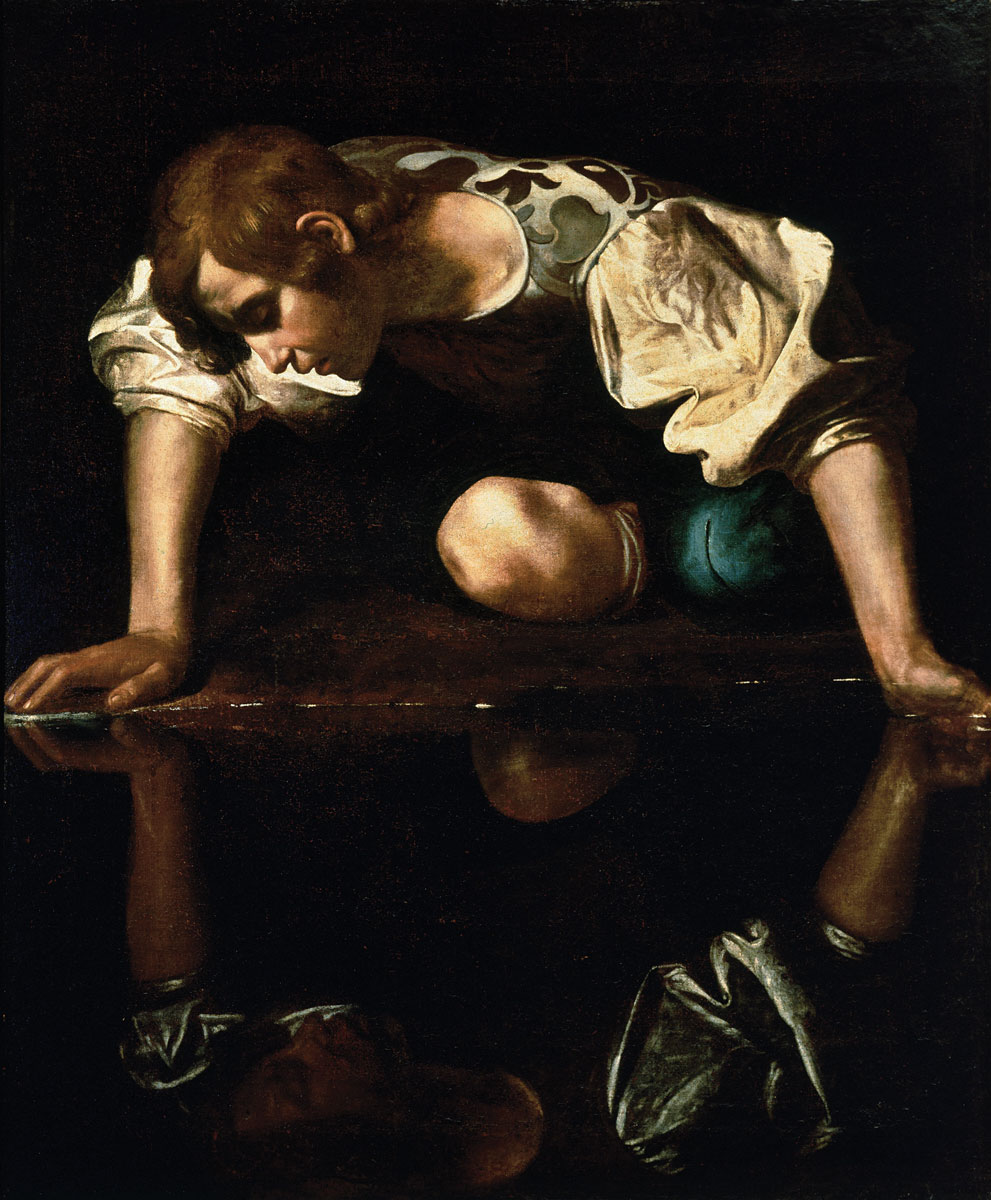
Thanks, in part, to the decline of variety theater and the arrival of motion pictures, the popularity of tableaux vivants waned in the 1920s. Interestingly, it has hung on as a component of the beloved Festival of Arts in Laguna Beach, California, where, since 1932, audiences have enjoyed The Pageant of the Masters, in which works of art are brought to life onstage, complete with musical accompaniment and narration. More recently, Chesterwood, the former studio home of sculptor Daniel Chester French (1850–1931) in Stockbridge, Massachusetts, has been mounting afternoons of tableaux vivants created by the New Hampshire-based theater artist and documentary filmmaker Doria Bramante.
Bramante attended New York University’s Tisch School of the Arts, where she began her studies in musical theater before shifting to The Classical Studio, a Shakespeare-centered program within the school. It had been founded by Louis Scheeder, who served as producer of Washington’s Folger Theatre Group and has produced three Off-Broadway shows, including Amlin Gray’s Obie-winning play How I Got That Story. Bramante is a veteran member of Canada’s Caravan Stage Company, which has performed original, circus-inflected, multi-media pieces aboard the tall ship Amara Zee. Her journey to Chesterwood — which is owned and operated by the National Trust for Historic Preservation — began in 2019, when site manager Margaret Cherin asked her to create a piece for a garden party celebrating its 50th anniversary as a Trust property.
Rooted in History
Every summer, Daniel Chester French (best known for his monumental statue of America’s 16th president inside the Lincoln Memorial in Washington, D.C.) left his home in New York City’s Greenwich Village to relax with his wife, daughter, and friends in the Berkshire hills. Margaret French Cresson recalled later:
“My father had the showman’s instinct for dramatic effects, and we produced tableaux that were frequently so good that we would plan a repeat performance and have the neighbors in to watch. He made a large frame and stretched a layer of mosquito netting across the front to give a softer appearance to the ‘picture.’ Then he would drape various members of the family and friends with yards of lovely materials, pose them behind the frame, which was clearly lighted by kerosene lamps and supporting reflectors, and lo! a charming living picture would result.”
Taking her cue from this historical precedent, and with French’s own frame at her disposal, Bramante flipped through art books to source images to recreate, settling on Sandro Botticelli’s “Primavera” (c. 1480), Jacques-Louis David’s “Death of Marat” (1793), and John Singer Sargent’s “El Jaleo” (1882).
Working with professional actors and dancers and using costumes loaned by the local theater ensemble Shakespeare & Company (which had once been in residence at Edith Wharton’s summer home nearby), Bramante put together a 30-minute presentation. “The program turned out to be really moving, and I realized that this is a beautiful artform,” says Bramante, who, with her husband, the metal artist and scenic designer Markus Weinfurter, directed the 2015 documentary film The Refugees of Shangri La.
When invited to return to Chesterwood the following year, Bramante expanded the parameters of the tableau vivant experience. Drawing from the Frenches’ archive, she “leaned fully into the fact that this was a family who loved doing this.” Centering the event on French, his wife, Mary, and daughter Margaret, Bramante opted for an immersive experience, as if the audience was arriving at a garden party. “We dressed in turn-of-the-20th-century clothing and greeted guests as the sounds of pianola rolls filled the summer air,” Bramante explains. Today her tableaux vivants remain a regular component of Chesterwood’s Arts Live! programming, a summertime lineup of events that also features music, dance, poetry, and drama.
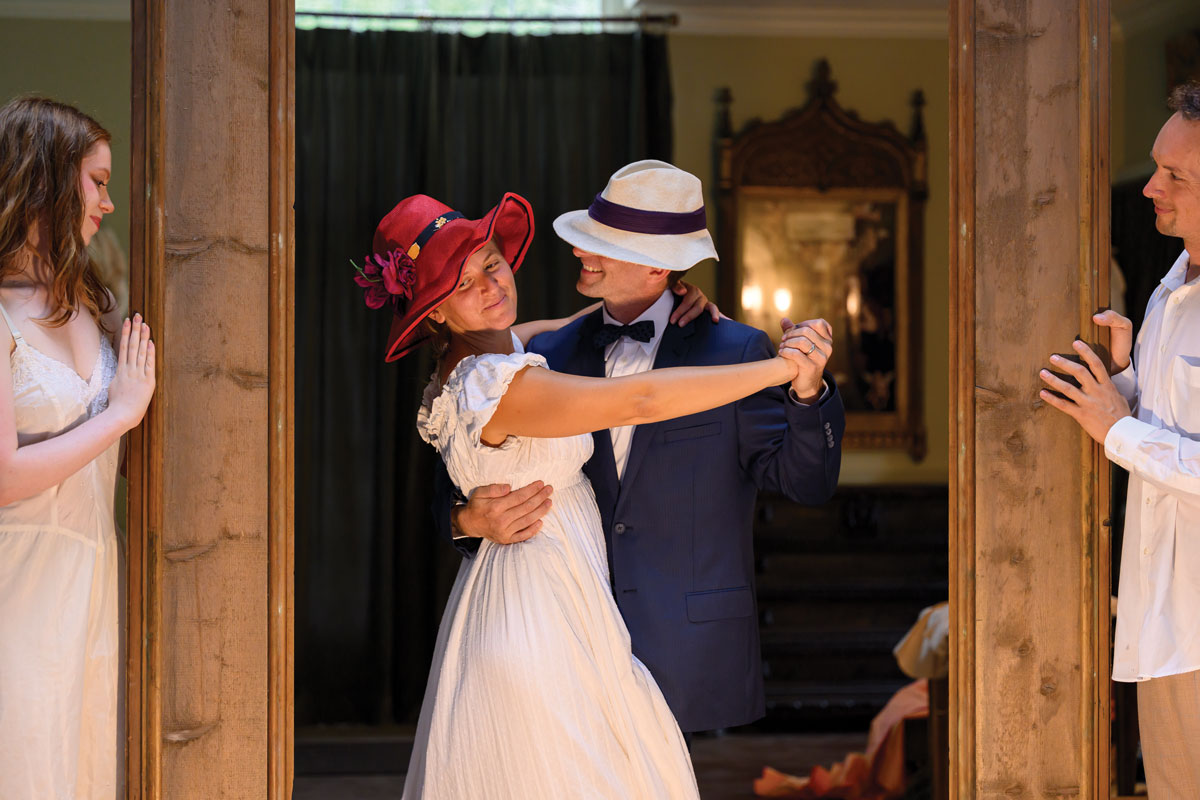
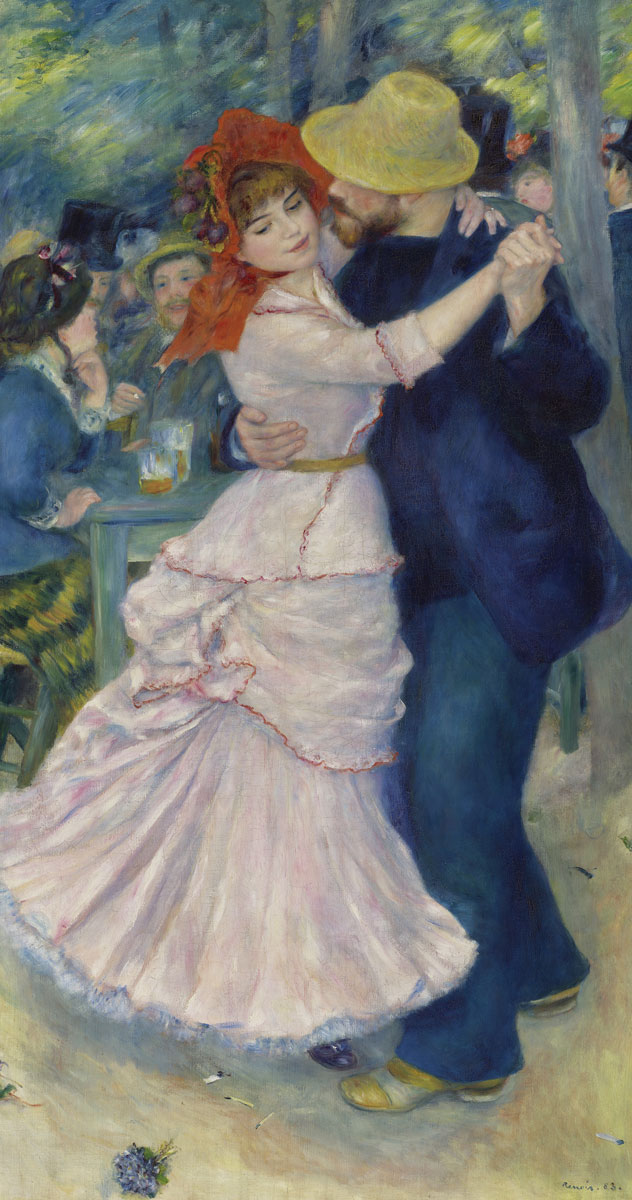
“The annual presentation of the tableaux vivants helps fulfill our mission of activating the historic site through the performing arts,” says Cherin. “With graceful choreography and inventive costuming, Doria and her actors literally make the paintings come alive.” Music, too, is a key component. Bramante has used “Questa O’ Quella” from Giuseppe Verdi’s Rigoletto as a prelude to the main event, and she always pairs the tableaux with contemporary compositions.
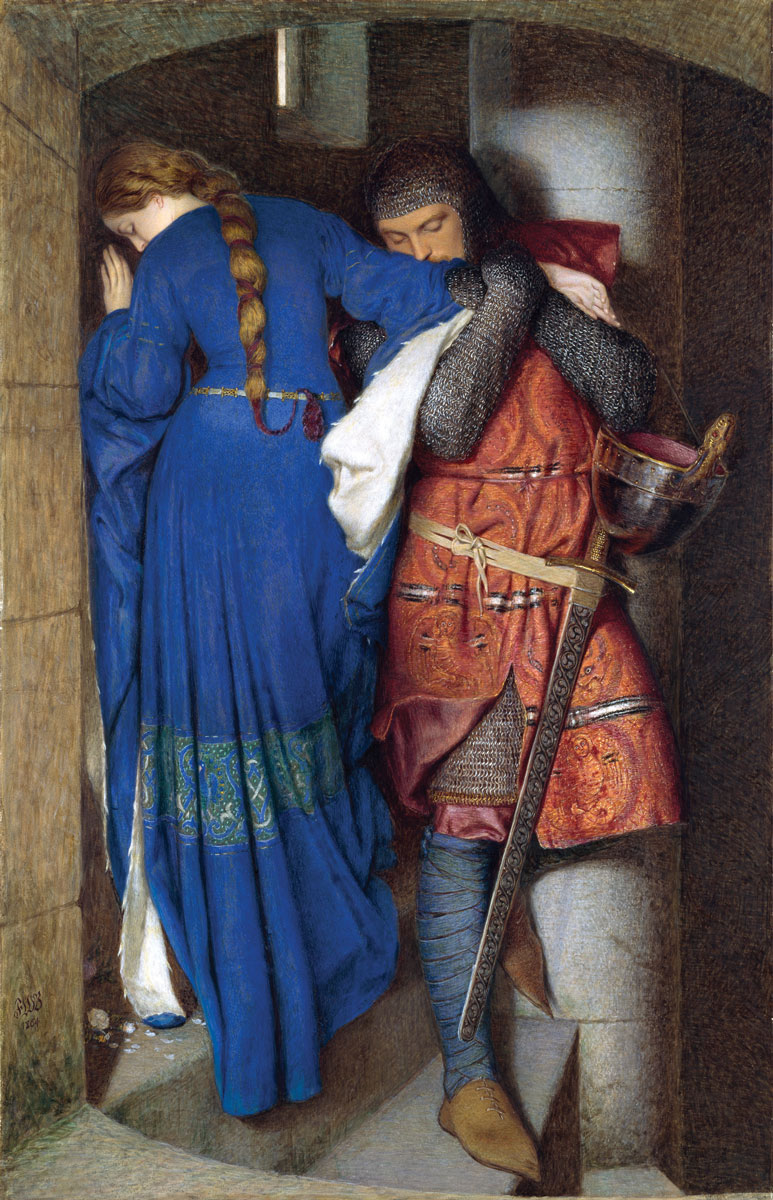
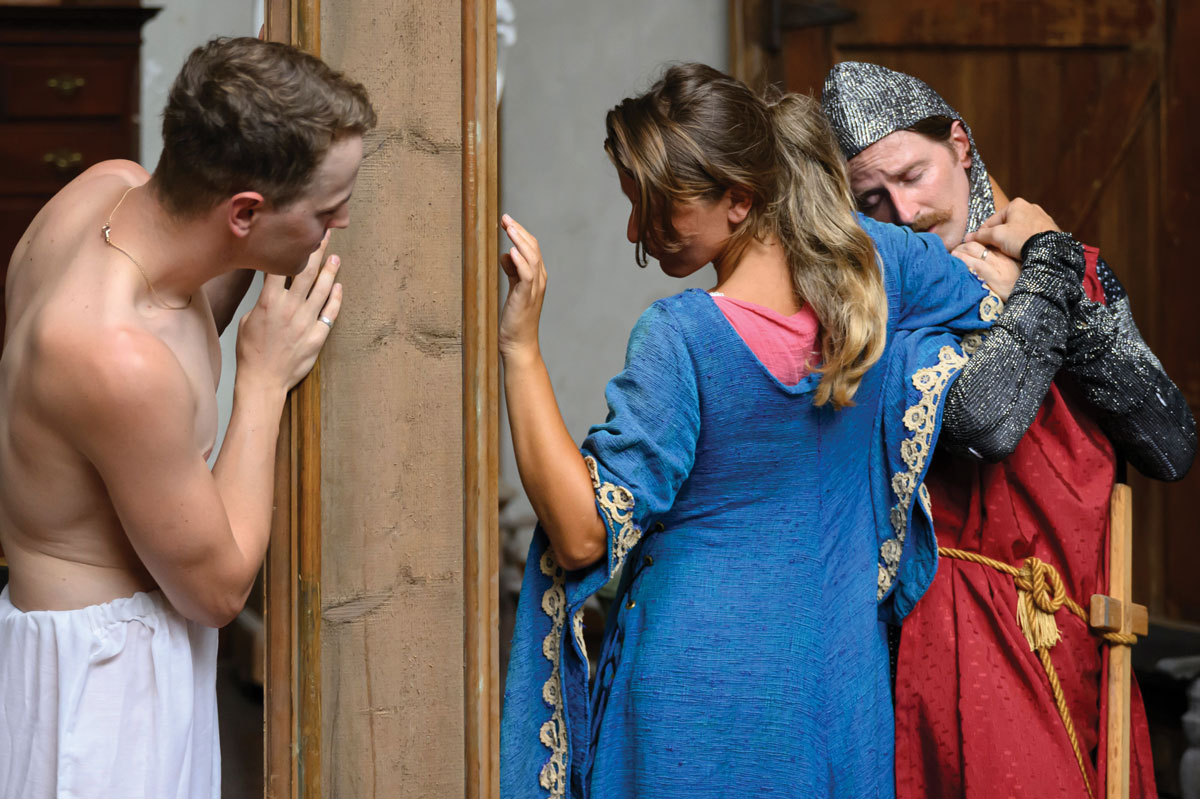
She set Botticelli’s Primavera to Paolo Vivaldi’s lilting “Childhood Memories,” and for a rendering of F.W. Burton’s medieval-inspired watercolor “The Meeting on the Turret Stairs” (1864) — which illustrates a crucial moment in a Danish ballad of tragic love — she chose a moody piano piece by Icelandic composer Ólafur Arnalds. “That music is so loaded with longing, it almost brought me to tears,” says Bramante, “and that painting is also loaded with longing and desire. I’m always looking for music that moves the painting.”
Bringing Art Alive Through the Tableau Vivant
For her first outing at Chesterwood, Bramante presented the tableaux in the garden. On her next visit, she moved them into French’s studio. “That’s where he mounted his own tableaux and the archive reveals exactly where he set up and how he lit his scenarios,” she notes. “I really want to pay homage to that space.” As a conceit to frame the afternoon’s activities, the costumed performers first hover over a large book from which they enthusiastically choose a painting to replicate. “This conveys an idea of spontaneity, a ‘what shall we do next’ excitement among this little group,” Bramante explains.
“Mainstream theater is a medium for language, for the voice in storytelling,” says actor Ryan Winkles, who has participated in various Chesterwood tableaux. “But tableaux vivants resonate in a room in a very different way. There is a sense of appreciation and curiosity in the audience, because our stillness creates a wonder that people don’t experience too often in an era when ‘content’ comes at them so rapidly. When you stop and look at something, even for a few minutes, your mind settles and starts to wander in a way that contemporary life doesn’t usually allow for.”
“I tell my company that the show hinges on how much fun we are having, that if we are having fun, audiences are having fun,” Bramante confides. “For Daniel Chester French, tableaux were serious, but they were also fun. Sometimes in the pre-show, I distribute Mary French’s drink recipes. Last year, we even recreated Édouard Manet’s “A Bar at the Folies-Bergère” and served people drinks through the frame. My desire is always to touch the audience’s hearts and have them leave the space feeling more inspired by the wonder of life itself than when they entered.”
Take your realism art to the next level when you attend Realism Live ~ a multi-day virtual art conference led by 20+ world class artists. (No tech skills? No problem! If you can click a link, you can join our event!) Learn more at RealismLive.com!
Blog post prepared for the web by Cherie Dawn Haas, Editor of Realism Today

 are essentially recreations of famous paintings and more, undertaken by costumed ...)