
Discover how Daud Akhriev’s journey from deportation to Russia’s top art school shaped his subtle, dreamlike realist paintings.
By Rose Fredrick
Daud Akhriev (b. 1959) has a complicated relationship with his homeland. A Russian born in “deportation,” he grew up with fellow deportees — gypsies, Greeks, and Germans from the Volga River region — whom Stalin had kicked out of Russia and sent to the Soviet republic of Kazakhstan. The Kazakhs, Akhriev fondly recalls, not only made room for thousands of foreigners, but folded them into their communities. “They took care of absolutely everybody. They didn’t see us as traitors, as we had been portrayed,” he recalls. “Maybe that’s why I like the ethnic look, because everybody in Kazakhstan was still dressed like in old times.”
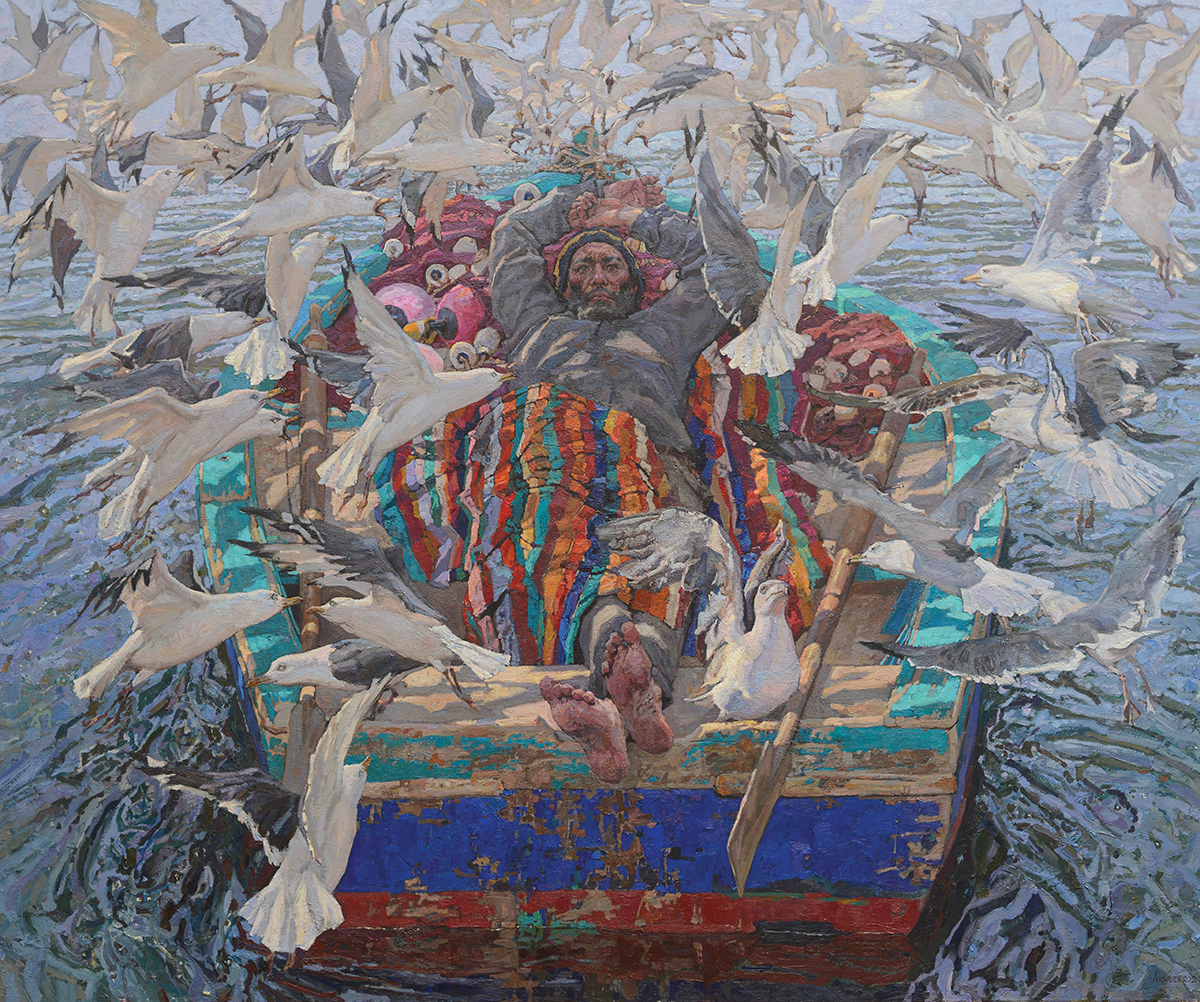
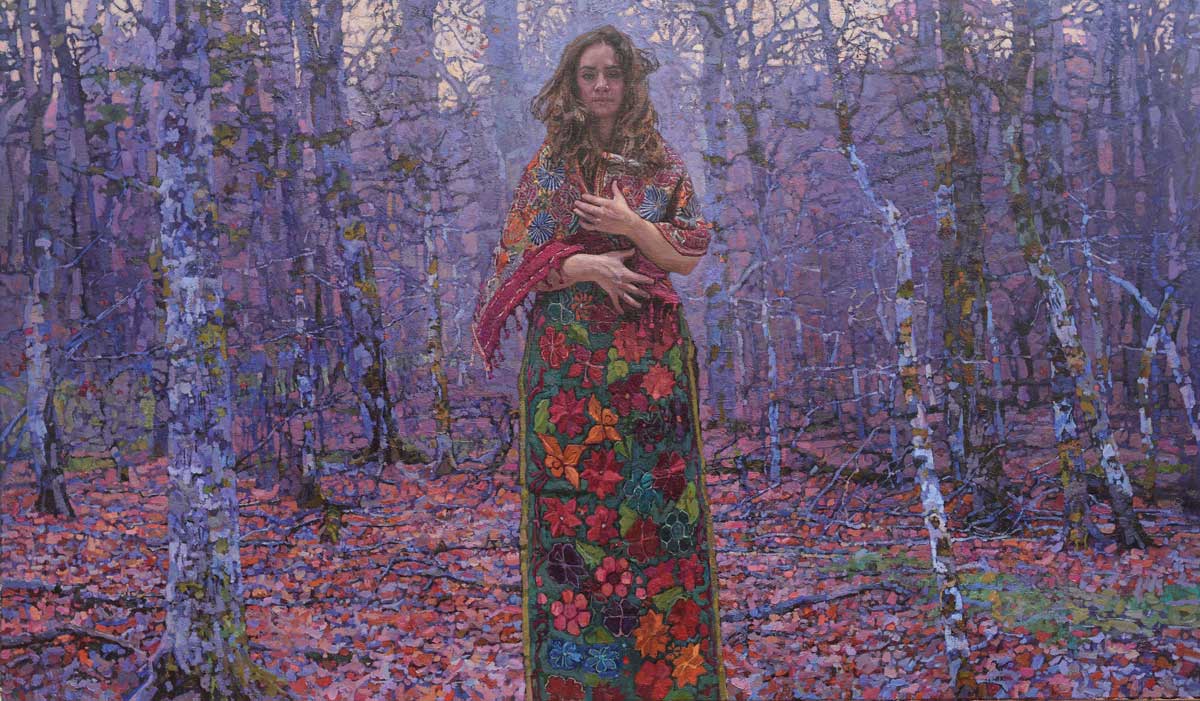
If you know only this about Akhriev, you will understand his subject matter: patterned tapestries, cloisonné vases, Russian teapots, formal, silent interiors, models draped in richly embroidered clothes, men hauling in fishing nets, or a solitary figure adrift at sea. But how, then, can you explain your sense that the teapot is still warm, or that someone just set that vase of flowers on the table, or that the man in the boat is aware of your presence but needs a moment longer before answering your question?
There is something under the surface of these images that resembles a waking dream, the kind that evaporates with the morning sun. To understand all that, you need to know what is behind Akhriev’s personal and artistic aesthetic.
Becoming an Artist
In Kazakhstan, Akhriev’s first-grade schoolteacher recognized his innate talent. “When there was a drawing class,” he says, “she noticed I was doing well. She asked my parents if, because they were working, she might take me to her house after school. There I would do my homework, and she would feed me, and I could paint.” In hindsight, Akhriev realizes how truly generous that teacher was. “She bought me this incredible watercolor set, and then the paper and brushes,” he says. “Later on, I remember how hard it was to find things like that. I have no idea where she got them. So, I was a bit lucky.”

By the time Akhriev turned 7, his family was allowed to move home to the northern Caucasus, a mountainous region near Georgia rich in oil. Before the 1917 revolution, the town had flourished and the elite had erected grand architecture in the Art Nouveau style popular at the time. After the revolution, those gorgeous buildings were nationalized. Akhriev attended a school for the arts in one such building that was, in itself, a work of art — with inlaid mahogany doors, elaborate ironwork, arched windows, and mosaic floors.
Though this art school would have been the equivalent of an American high school, the classes were much more in line with a college degree. Upon graduation, Akhriev was prepared for his six-year stay at the Repin Academy of Fine Arts in Leningrad (now St. Petersburg), where he arrived well-trained in all media including pastel, even though pastel was used only for sketching, not full-fledged paintings. A few years into his training, a young American student arrived at the Academy and introduced him to the full versatility of pastel, but we are getting ahead of ourselves.
The rigorous training artists undergo at the Repin Academy is world-renowned. You can spot their works across a room: they don’t necessarily paint the same way, but there’s something very Russian about the work, a sensibility or a longing, perhaps, just beneath the surface. Maybe this is simply a Russian aesthetic, or maybe it’s a depth of feeling instilled in artists from birth and coaxed onto the canvas by their instructors.
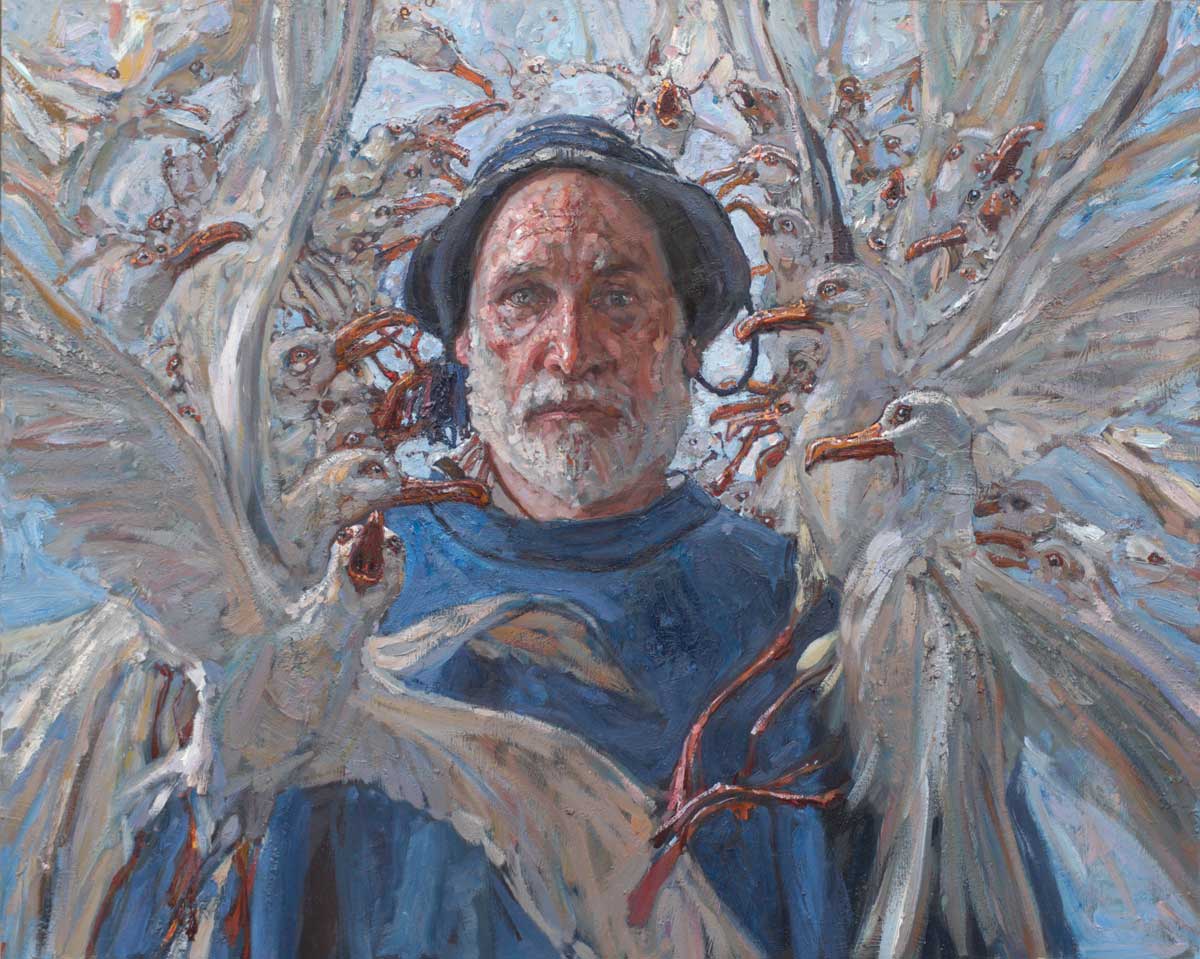
“Imagine,” Akhriev says, “if every professor you meet is on the level of Andrew Wyeth. My first year, sometimes I would stand in the corridor waiting for them to pass — just for the feeling of seeing someone whose art was hanging in museums. When somebody asks me, ‘What was it like to draw and paint and compose six days a week, with everything provided?’ — I reply, ‘That was luck.’”
Luck, yes, but also hard work and a desire to express the truth of the world by carefully weaving stories that reveal themselves over time. Akhriev recalls, “Those professors tried to share with us what I could only digest over time — that the most important things in art are the subtleties.”
Read the full article in Fine Art Connoisseur, March/April 2025
Become a Realism Today Ambassador for the chance to see your work featured in our newsletter, on our social media, and on this site.