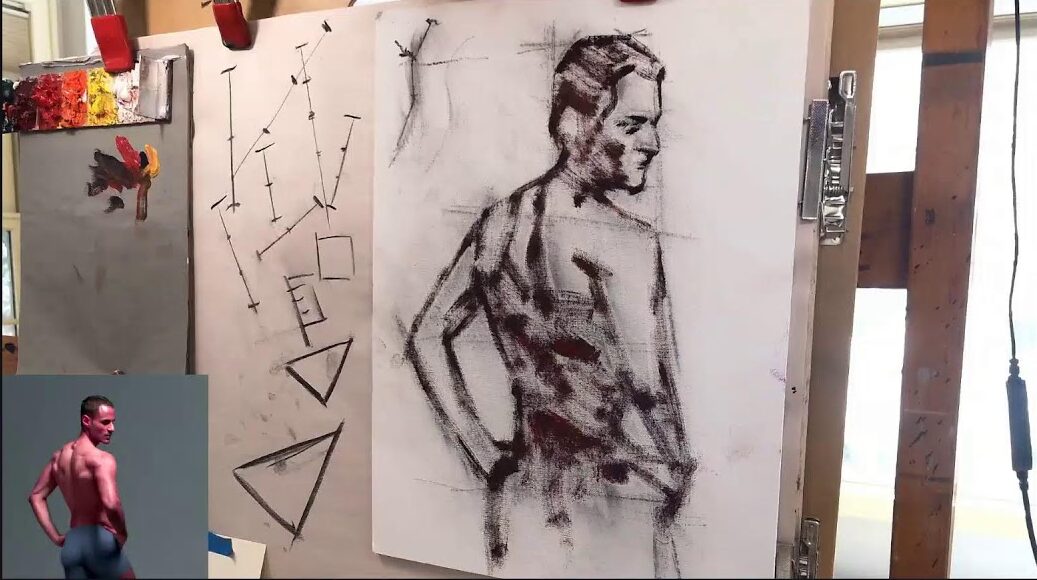
On Figure Drawing Proportions > Proportion is the backbone of believable drawing and painting. In this episode of Art School Live hosted by Mandy Theis, Ricky Mujica lays out a pragmatic, observation-first approach that moves beyond rote point-to-point measuring. The result is a flexible toolkit—units, angles, faceted lines, triangles, negative shapes, and perceptual tricks—that helps you find accurate relationships faster and with more confidence.
Watch here:
Start with measuring—but make it smarter
Measuring is useful for a rough cut, but it has limits. Mujica recommends starting with a reliable unit—most often the head (top to chin)—because it contains clear subdivisions (brow, nose, mouth). Use that unit to find halves and thirds, and establish the vertical envelope before worrying about widths.
Practical measuring tips:
- Use your dominant eye. Frame a small hole with your hands, open both eyes, close one and then the other. The eye that keeps the image stable is the dominant one to keep open when measuring.
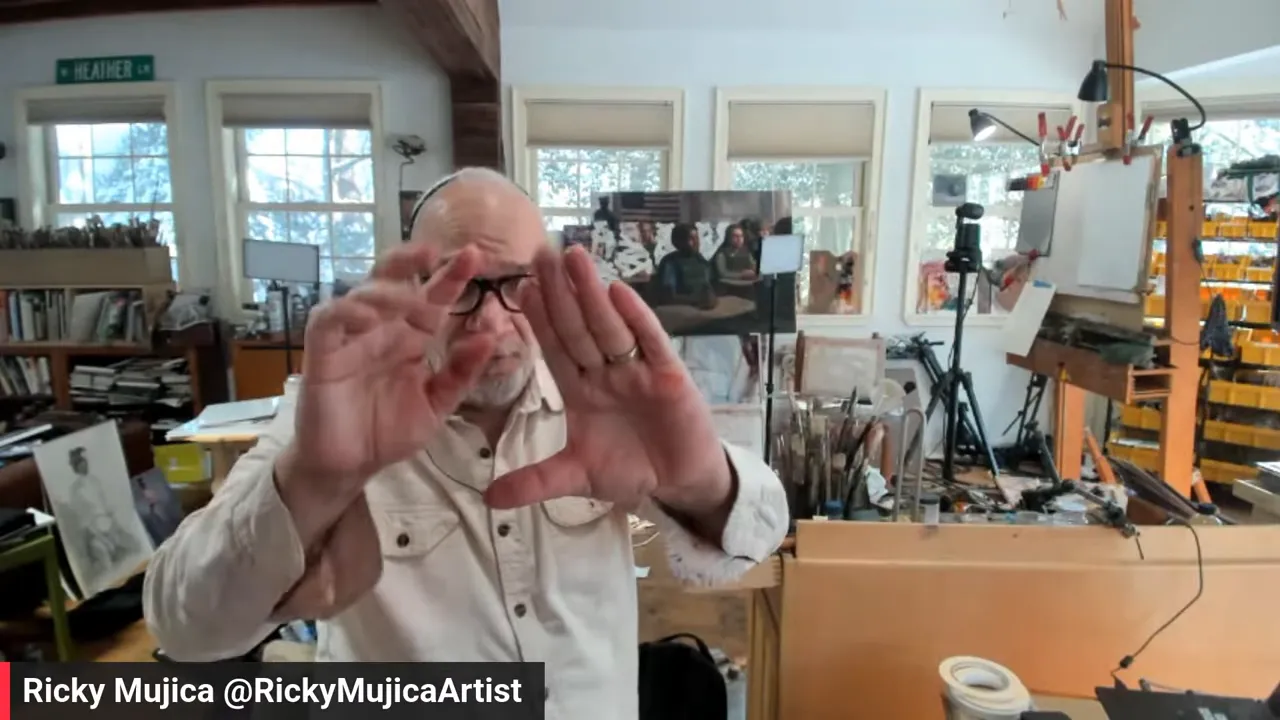
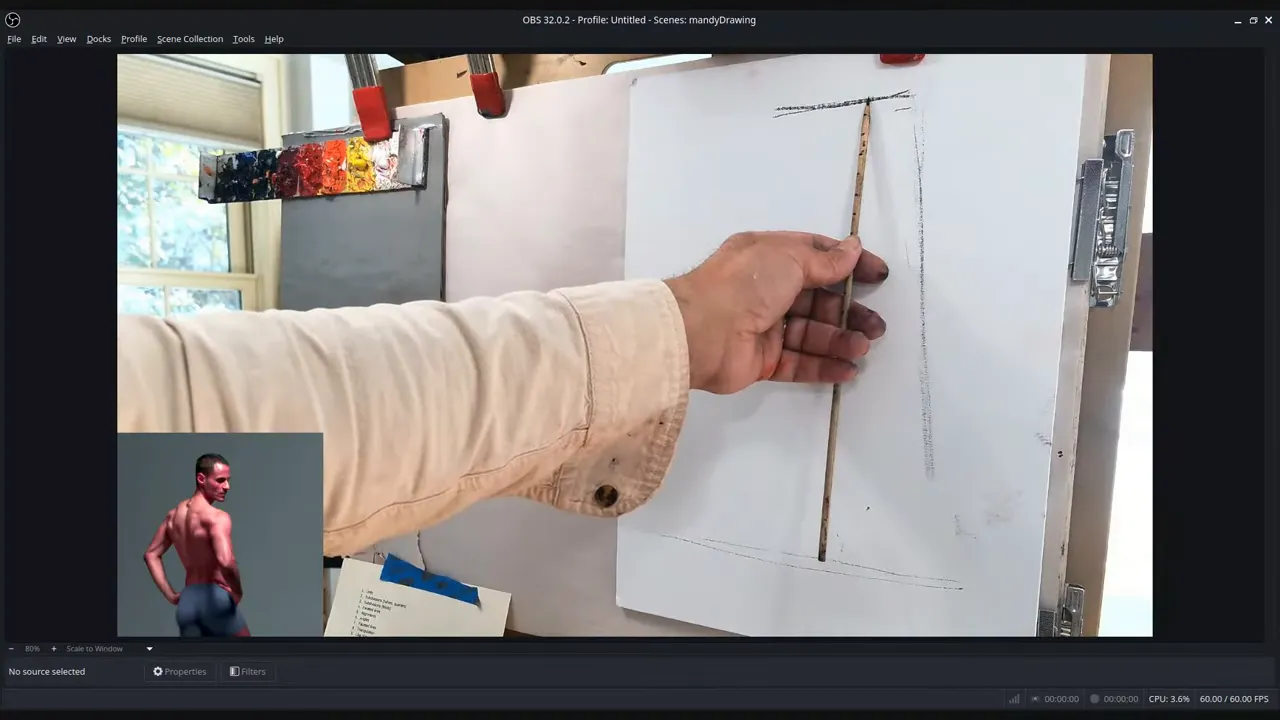
- Keep your arm extended and the stick perpendicular. Shortened arm positions and changing distances ruin repeatability.
- Measure with imagination, then check. Try to place the mark visually, then verify with your tool. This trains the eye so tools become a teacher, not a crutch.
Cubing, faceted lines and angles: make curves measurable
Curves are hard to copy. Mujica suggests breaking curves into faceted lines: start low-resolution with large facets, then increase resolution. Each facet has angles that are easy to match and check, and once all angles are right, distances tend to fall into place.
Cubing is another visual shortcut. Look for perfect squares—say, chin to hairline—and use that square to place the back of the head or other landmarks. These simple geometric anchors act like rulers in the image. 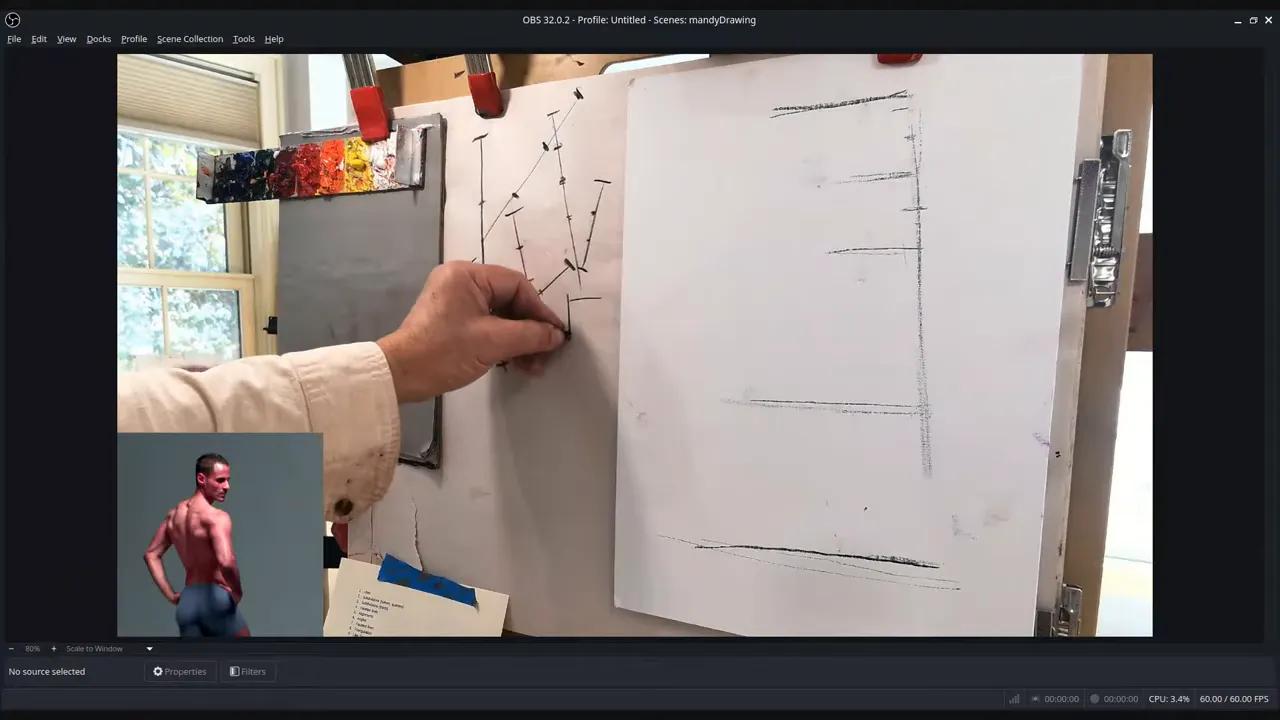 Triangulation
Triangles are stable and scale-invariant. If you can hold one distance and match two angles, you can find a third point quickly. Triangulation excels on small details that are hard to measure directly and works at any scale. 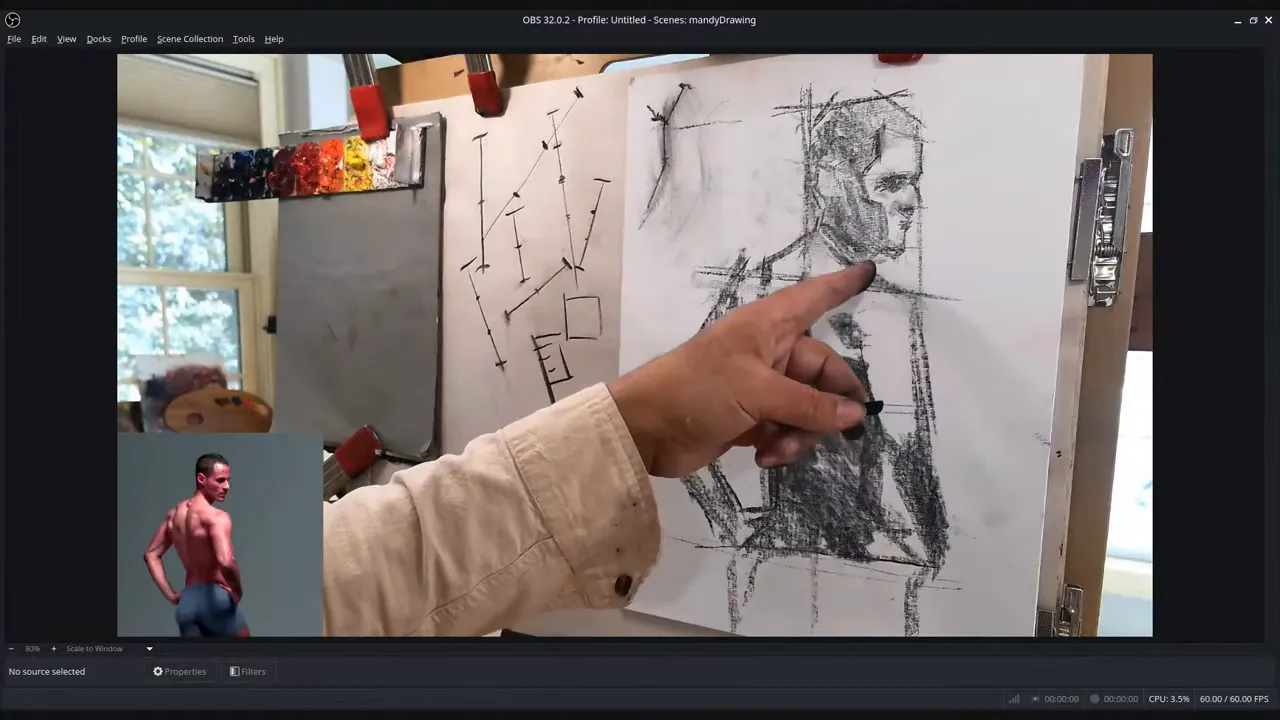
Negative shapes, alignments and the plumb line
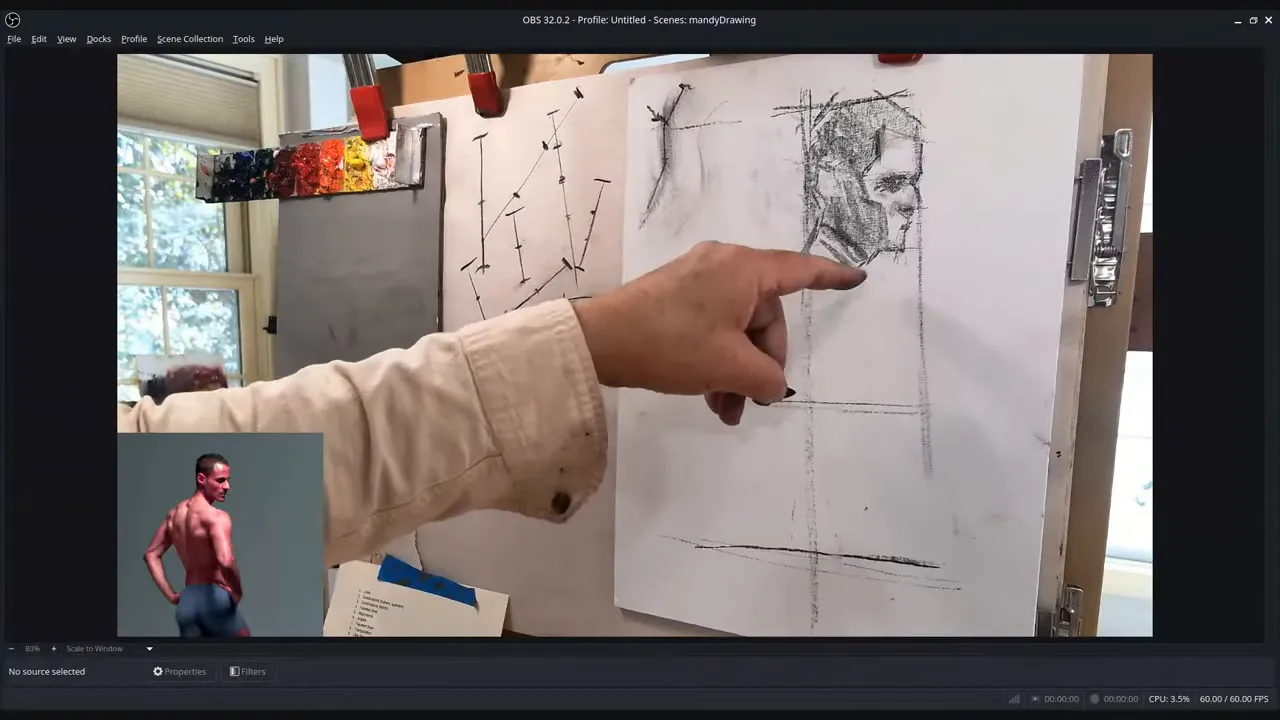
Look for clues everywhere. Negative shapes define relationships when perspective complicates positive forms. Drop a central “data line” or plumb line to collect alignment points—brow, chin, shoulder offsets—and use those anchors to compare widths and depths. These alignments let you check an idea against multiple clues so mistakes reveal themselves and become fixable.
Pareidolia and the puzzle mindset
Mujica encourages naming shapes—seeing a fold as a squid or a shadow as a person makes it findable and describable. Calling shapes by memorable images is a perceptual shortcut he calls pareidolia. Combine that with the idea that painting is a puzzle: look for clues, solve easy pieces first, and steadily narrow down the harder parts.
Pareidolia defined: Pareidolia is the psychological phenomenon of perceiving familiar, meaningful patterns—most commonly faces—in random, ambiguous, or inanimate stimuli, such as seeing shapes in clouds or a face on the moon. It is a natural, evolutionary mechanism designed for rapid threat detection and object recognition.
“You are solving a puzzle.”
From charcoal block-in to color passes
Start loose with charcoal to establish proportion and light versus dark. Dust it off and treat the drawing as a base for a solvent-free dry-brush oil pass. Keep the dead-color layer simple—big masses of color—so changes remain easy. Details come in a later pass; fix proportion and value gradually in small increments rather than trying to perfect everything at once. 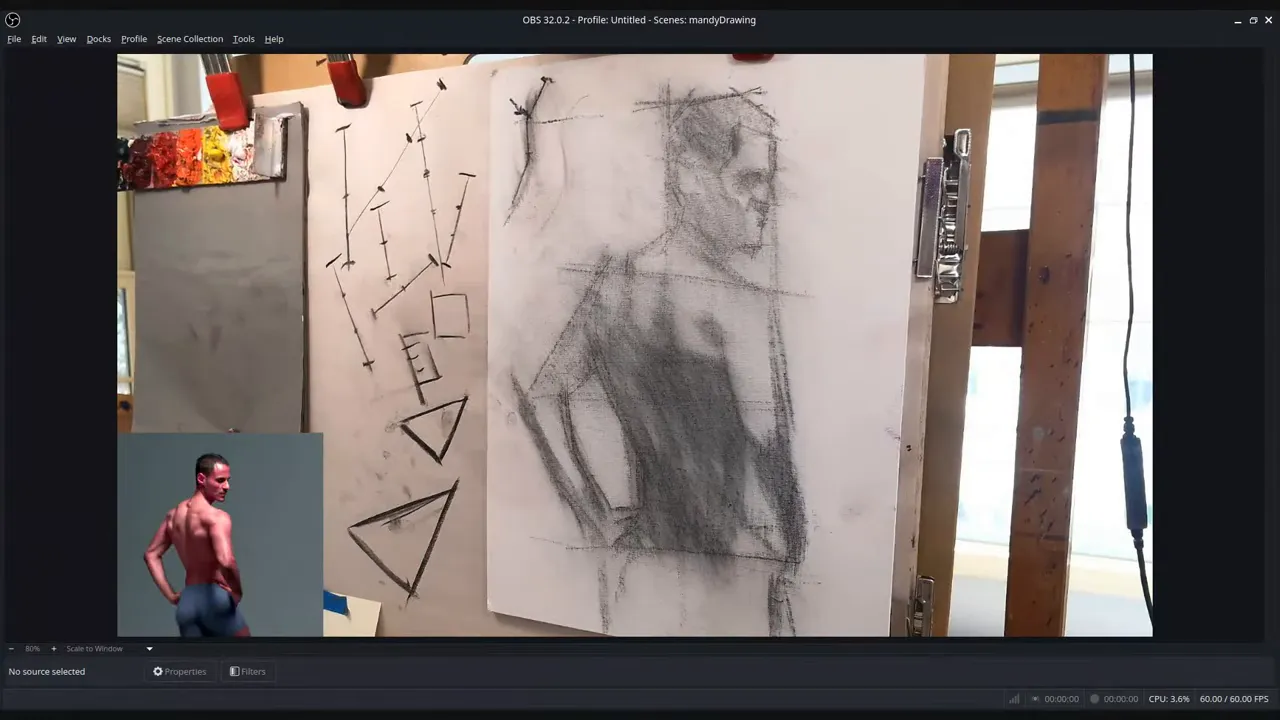
Short exercises to train the eye
- Draw a short line, visually create a unit, and mark halves and thirds on a page of newsprint.
- Practice matching angles with a skewer: lock your body, match the angle on the model, then transfer to the drawing.
- Make a page of simple cubes and perfect squares; use them to land back-of-head and shoulder placements.
These small drills sharpen relative-size judgment and make proportion work faster and more reliable than measuring alone.
The payoff is practical: fewer frustrating guesses, more informed corrections, and a workflow that turns each mistake into a clue on the path to a finished painting.