
Through his narrative art, Francisco Badilla seeks to emphasize an idea that transcends time — the contemplation of a solitary moment, situated in a contemporary context.
By Francisco Badilla
On “Listening to the Invisible”
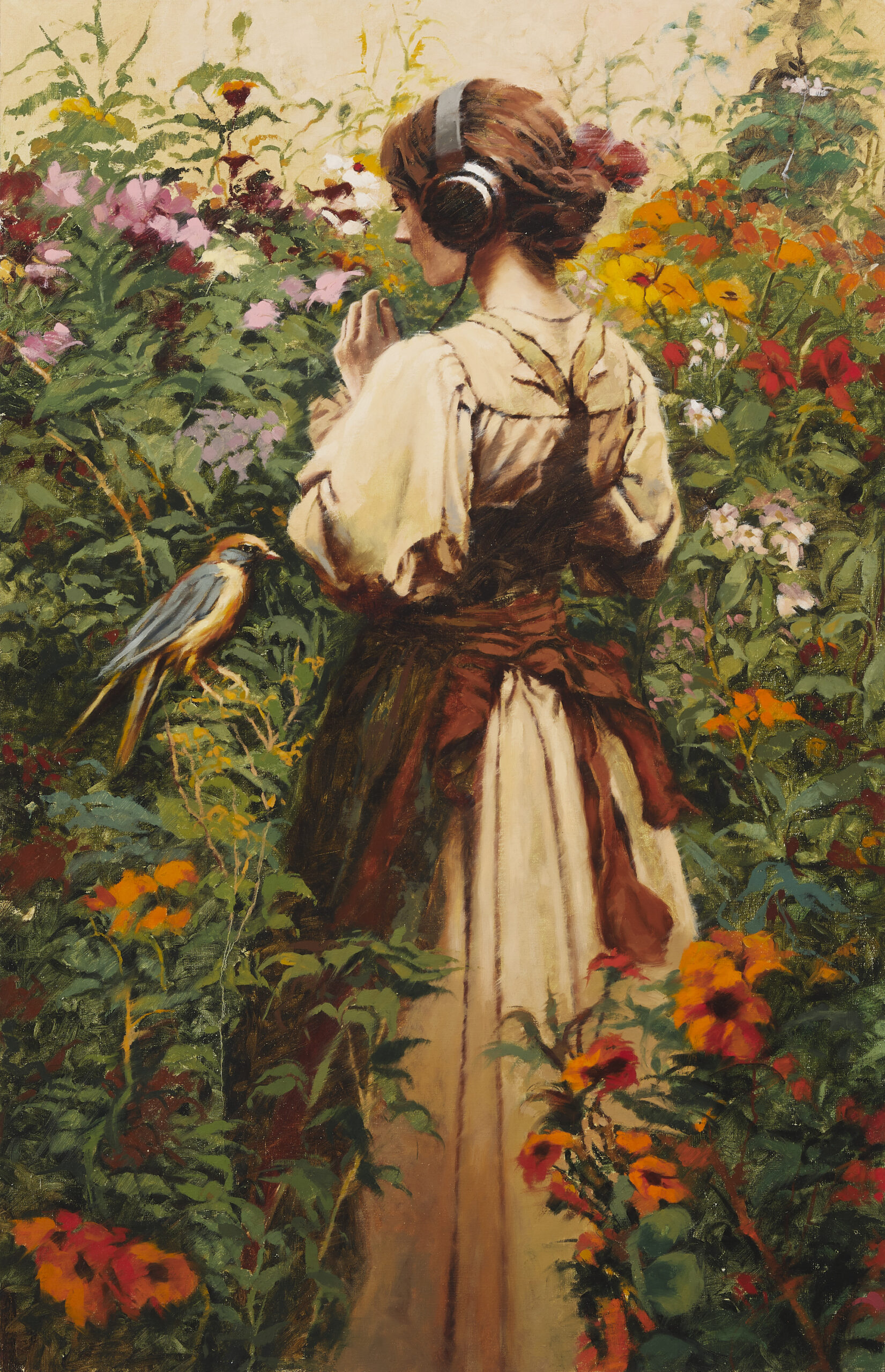
This work was born from the desire to explore the boundary between past and present, between the real and the imagined. The central figure, dressed in 16th-century clothing, engages in a dialogue with contemporary elements—such as the headphones—creating a visual tension that questions the passage of time and the transformation of human experience. The garden surrounding her, serene and luminous, becomes a space for contemplation, where the bird perched nearby adds a symbol of delicacy and connection with nature. It is a scene that invites pause, introspection, and an open interpretation, where every viewer can discover their own narrative.
The creative process for this piece began with the use of various technological tools. I employed an artificial intelligence program, combining it with photographs I took myself. From there, I developed the image in Photoshop as if it were a collage: adding elements, removing others, and adjusting everything until I achieved the composition I had envisioned. This served as my digital sketch. Once the image reached the desired state, I began the manual work. The drawing was done in charcoal on a linen canvas, which served as the base for the painting.
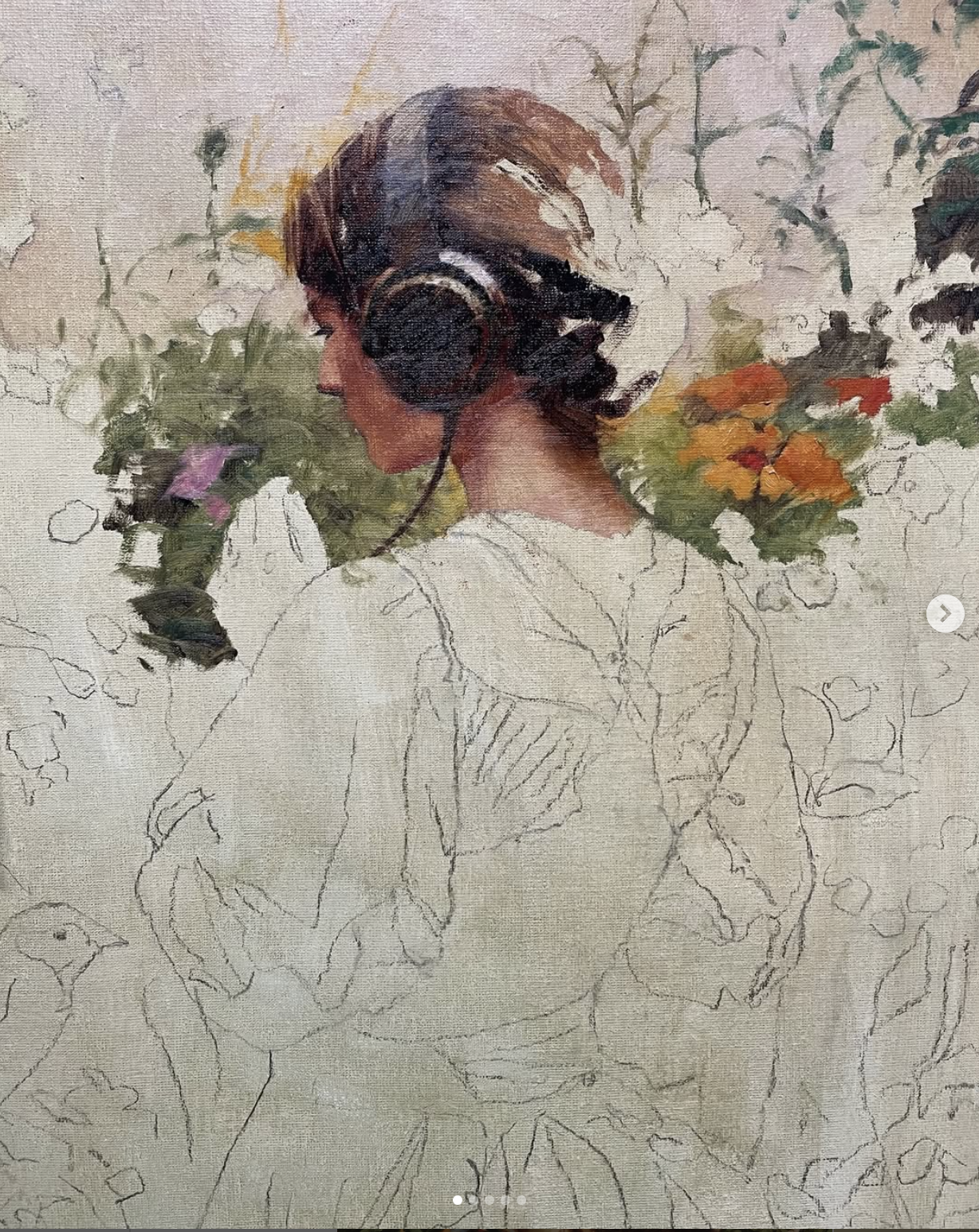
I always paint in layers: the first is simple, with few details, using transparent paints to create light, atmospheric colors. In this phase, I aim to blend the contours to generate depth and harmony. Then, I add layers with more intense, opaque colors, reinforcing forms and volumes. Finally, I apply textures and impasto in the highlights, giving strength and presence to the work. I strive for each painting—like most of my creations—to have depth and a loose, expressive stroke. When I paint, I avoid controlling every brushstroke entirely; I let the gesture flow, creating moments of vibrant energy on the surface.
The final result is a fusion of technique and emotion, where the precision of the drawing meets the freedom of the brushwork, and where the story depicted comes alive through light, color, and movement.
On “In Suspended Time”
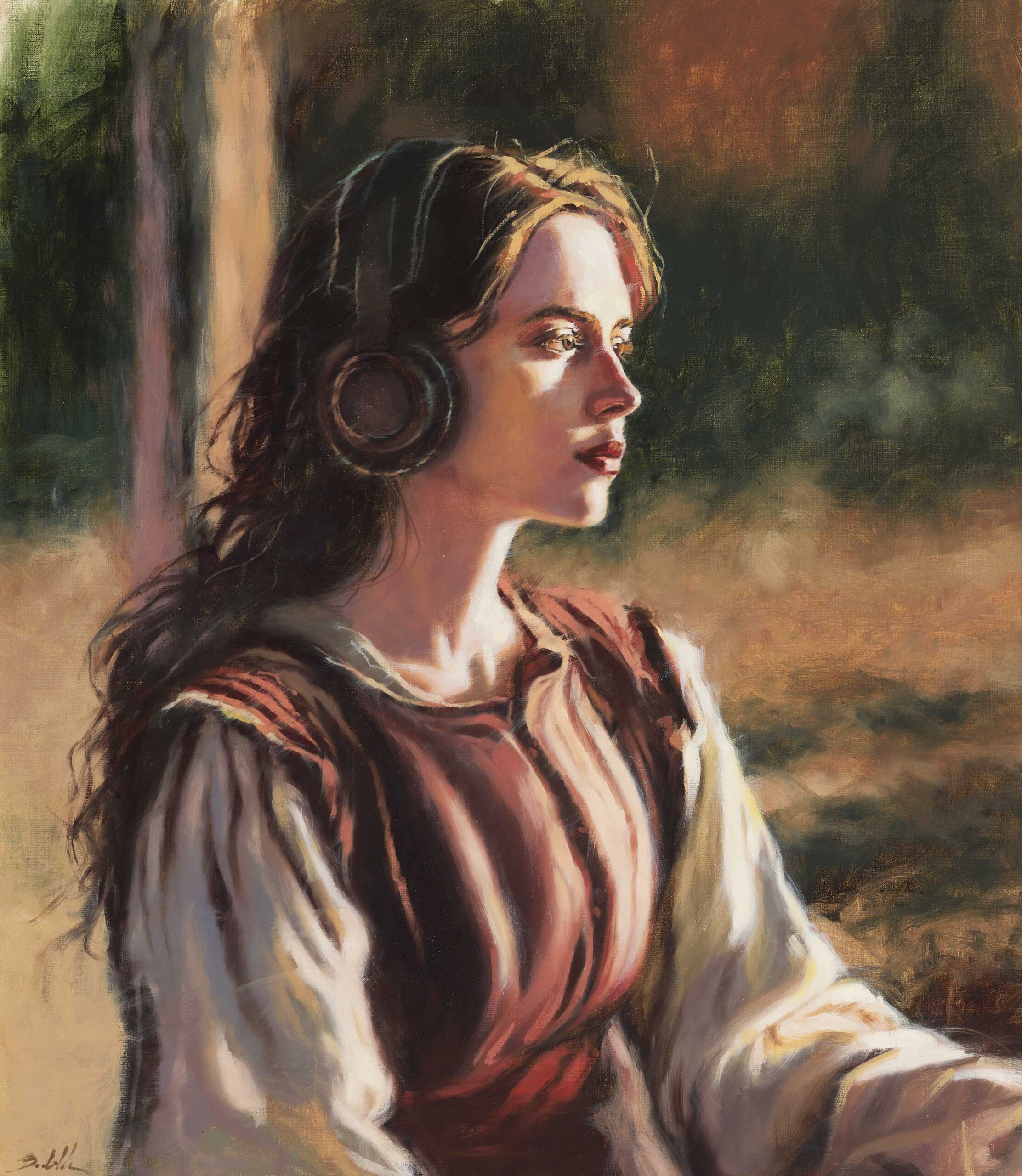
In this painting, I sought to emphasize the same spirit: an idea that transcends time—the contemplation of a solitary moment, yet situated in a contemporary context. The figure is alone, immersed in her own thoughts, but at the same time not fully present. There is a paradox: while reflecting and withdrawing into introspection, she remains connected to technology, which provides the dopamine typical of the modern world.
The creative process began in the same way as always: starting with photographs and technology, which I then translate into the classical language of oil painting on canvas. I first drew in charcoal, built the base with glazes of transparent paint, and gradually applied more opaque layers, finishing with the details and light impasto. My intention was to focus attention on the face, leaving the rest of the image slightly blurred, thus creating a contrast between presence and absence, focus and diffusion.
On “Echoes of the Past, Reflections of the Present”
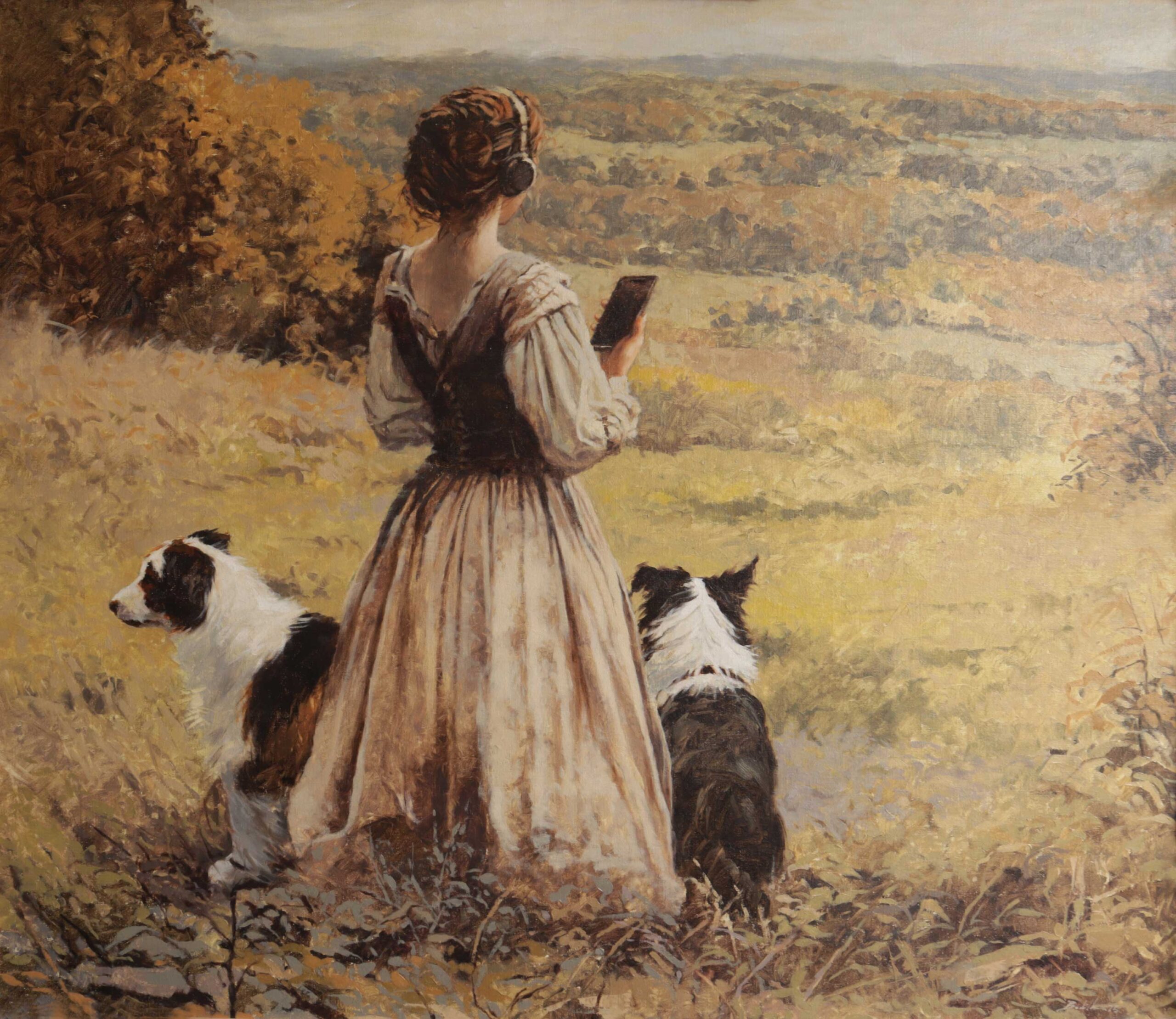
In this work, I also incorporated a concept of loyalty, companionship, and affection. The three figures form a kind of trinity—a symbol of friendship, love, and contemplation of nature—a sublime that does not belong solely to the past but manifests in the present.
Related Article: Creativity, Happiness, and Stillness: The Art of Francisco Badilla